
Side Entry Trunnion Ball Valve
Side Entry Trunnion Ball Valve is selected for pipeline transmission and high-pressure isolation where conventional body access and broad size/class coverage are required. A side-entry trunnion ball valve is the standard pipeline configuration for many API 6D applications. The body is assembled from the side and can be supplied in 2-piece or 3-piece construction, full or reduced bore, with SPE or DPE seats and RF, RTJ or butt-weld ends.
Side Entry Trunnion Ball Valve for industrial valve projects.
A side-entry trunnion ball valve is the standard pipeline configuration for many API 6D applications. The body is assembled from the side and can be supplied in 2-piece or 3-piece construction, full or reduced bore, with SPE or DPE seats and RF, RTJ or butt-weld ends.
When to select this design
Pipeline transmission and high-pressure isolation where conventional body access and broad size/class coverage are required.
Choose side entry when broad pipeline applicability and conventional workshop maintenance are more important than in-line top access.
Typical applications
- Gas transmission
- Crude oil pipelines
- Compressor stations
- Terminals and tank farms
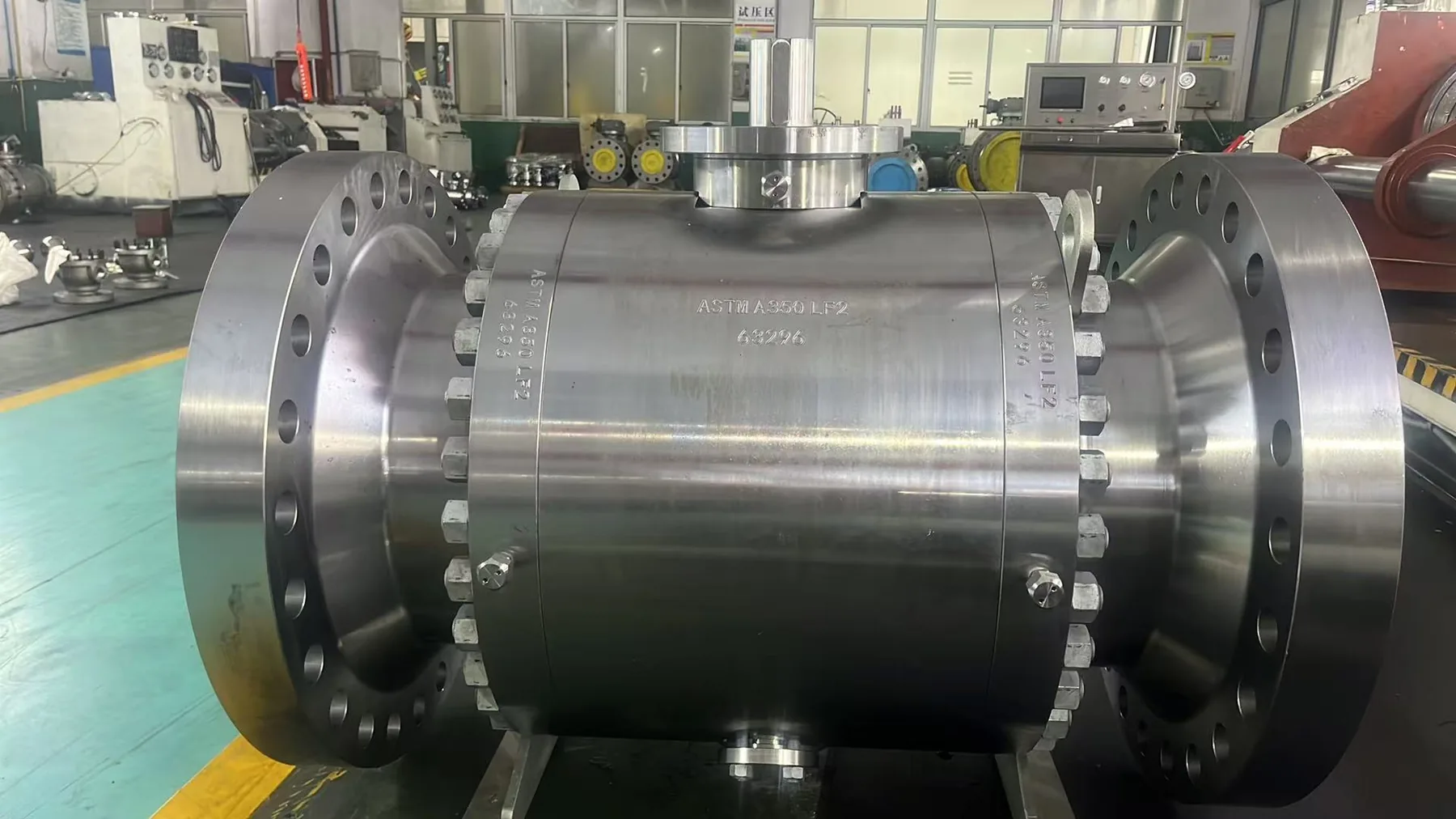
Side Entry Trunnion Ball Valve: design points to confirm.
This is a specific valve construction. Final size, class, material and seat combinations depend on the approved datasheet and design calculation.
| Body construction | Side-entry trunnion construction normally uses a two-piece or three-piece split body assembled around a trunnion-supported ball. This is a common architecture for API 6D pipeline valves across larger sizes and higher pressure classes. |
|---|---|
| Seat & sealing | Define SPE or DPE seat behavior, pressure direction, cavity relief and whether the project requires DBB or DIB functionality. Seat insert material depends on pressure, temperature and media. |
| End connection | RF, RTJ and butt-weld ends are common project choices. High-pressure classes may favor RTJ or BW depending on the piping class and maintenance strategy. |
| Engineering focus | Review stem design, trunnion loads, seat spring load, cavity overpressure protection and operating torque. Full-bore configuration may be specified where pigging or low pressure drop is required. |
| Material selection | Cast or forged carbon steel, low-temperature steel, stainless steel or duplex materials may be specified. Ball/stem material, overlay, bolting and seals must be coordinated with the body material and service. |
| Testing & inspection | Typical project checks may include shell and seat pressure testing, DBB verification where specified, fire-safe qualification, fugitive-emission requirements, NDE/PMI and coating inspection. |
Engineering considerations for Side Entry Trunnion Ball Valve.
Construction and maintenance
Side-entry trunnion construction normally uses a two-piece or three-piece split body assembled around a trunnion-supported ball. This is a common architecture for API 6D pipeline valves across larger sizes and higher pressure classes.
Seat, sealing and torque
Define SPE or DPE seat behavior, pressure direction, cavity relief and whether the project requires DBB or DIB functionality. Seat insert material depends on pressure, temperature and media.
Piping and installation
RF, RTJ and butt-weld ends are common project choices. High-pressure classes may favor RTJ or BW depending on the piping class and maintenance strategy.
What to verify before approving the technical offer.
Engineering risk
Review stem design, trunnion loads, seat spring load, cavity overpressure protection and operating torque. Full-bore configuration may be specified where pigging or low pressure drop is required.
Materials and traceability
Cast or forged carbon steel, low-temperature steel, stainless steel or duplex materials may be specified. Ball/stem material, overlay, bolting and seals must be coordinated with the body material and service.
Inspection and testing
Typical project checks may include shell and seat pressure testing, DBB verification where specified, fire-safe qualification, fugitive-emission requirements, NDE/PMI and coating inspection.
Send the valve datasheet together with the piping class and project valve, material, testing and coating specifications. Missing design inputs should be clarified rather than assumed.
Other Trunnion Mounted Ball Valves configurations.
Compare related designs by construction, pressure class, temperature range and service conditions.
Choose forged construction when the material specification or pressure class requires forged pressure-containing parts rather than cast bodies.
Compare Forged Trunnion Ball Valve →Choose metal seating when temperature, erosion or solids make PTFE, nylon or similar soft seats unsuitable.
Compare Metal Seated Trunnion Ball Valve →Return to the Trunnion Mounted Ball Valves range to compare all configurations.
Back to Trunnion Mounted Ball Valves Range →Continue the technical selection.
Use these pages to check pressure class, material, standard and end-connection requirements against this valve design.
Side Entry Trunnion Ball Valve FAQ
What is a side entry trunnion ball valve?
A side-entry trunnion ball valve is the standard pipeline configuration for many API 6D applications. The body is assembled from the side and can be supplied in 2-piece or 3-piece construction, full or reduced bore, with SPE or DPE seats and RF, RTJ or butt-weld ends.
Where is a side entry trunnion ball valve commonly used?
Typical applications include Gas transmission, Crude oil pipelines, Compressor stations, Terminals and tank farms. Final suitability depends on the actual service medium, pressure, temperature and project specification.
What information is needed to quote a side entry trunnion ball valve?
Provide size, quantity, pressure class, body and trim materials, seat material, end connection, design pressure and temperature, media, operation, design standard, fire-safe/emission requirements, testing, coating and documentation scope.
How is a side entry trunnion ball valve different from other trunnion mounted ball valve designs?
Choose side entry when broad pipeline applicability and conventional workshop maintenance are more important than in-line top access.
Technical documents for project review.
For technical evaluation, request the applicable product documents and inspection records for the offered valve configuration.
Product Photos
Additional finished-valve, nameplate and component photos are available for the selected valve configuration.
GA Drawing / Datasheet
GA drawings and datasheets are prepared for the selected size, pressure class and valve configuration.
Testing & Inspection Records
Inspection documentation can include pressure testing, dimensional inspection, PMI, NDE/NDT and coating records as required by the project.