
Metal Seated Trunnion Ball Valve
Metal Seated Trunnion Ball Valve is selected for high-temperature, abrasive or erosive service where soft seats cannot provide reliable life or temperature capability. A metal seated trunnion ball valve replaces the primary soft seat interface with hard-faced metal seating surfaces. Ball and seat coatings or overlays are selected around temperature, solids content, erosion risk and leakage requirement. Actuator torque and thermal effects require more attention than on a soft-seated valve.
Metal Seated Trunnion Ball Valve for industrial valve projects.
A metal seated trunnion ball valve replaces the primary soft seat interface with hard-faced metal seating surfaces. Ball and seat coatings or overlays are selected around temperature, solids content, erosion risk and leakage requirement. Actuator torque and thermal effects require more attention than on a soft-seated valve.
When to select this design
High-temperature, abrasive or erosive service where soft seats cannot provide reliable life or temperature capability.
Choose metal seating when temperature, erosion or solids make PTFE, nylon or similar soft seats unsuitable.
Typical applications
- High-temperature process lines
- Abrasive media
- Dirty hydrocarbon service
- Severe-service isolation
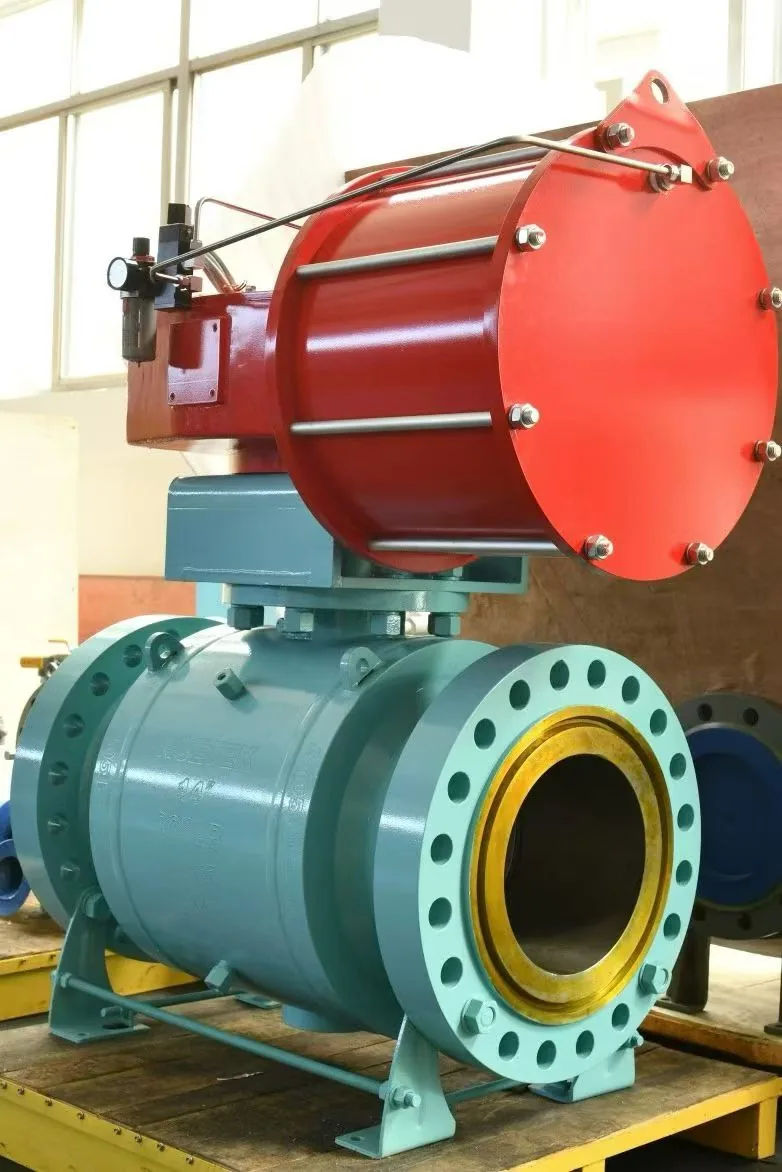
Metal Seated Trunnion Ball Valve: design points to confirm.
This is a specific valve construction. Final size, class, material and seat combinations depend on the approved datasheet and design calculation.
| Body construction | Trunnion support is combined with hard-faced metal seating for severe service. Body construction can be cast or forged depending on pressure class and project material requirements. |
|---|---|
| Seat & sealing | Ball and seat surfaces may use hardfacing, coating or overlay selected around temperature, solids, erosion and corrosion. Required leakage acceptance must be defined because metal-seat performance is evaluated differently from soft seats. |
| End connection | RF, RTJ or butt-weld ends can be specified according to pressure class and piping design. Thermal expansion and piping load should be considered in severe-temperature service. |
| Engineering focus | Operating torque, thermal cycling, differential expansion, coating hardness and seat contact stress are key engineering points. Actuator margin is normally more critical than for a soft-seated valve. |
| Material selection | Base materials and hardfacing must be compatible with the process fluid and temperature. Specify coating/overlay requirements, corrosion allowance and any hardness restrictions in the project material specification. |
| Testing & inspection | Define pressure testing plus any high-temperature, cycling, leakage or coating inspection required by the service. Fire-safe and fugitive-emission requirements should be coordinated with packing and body seals. |
Engineering considerations for Metal Seated Trunnion Ball Valve.
Construction and maintenance
Trunnion support is combined with hard-faced metal seating for severe service. Body construction can be cast or forged depending on pressure class and project material requirements.
Seat, sealing and torque
Ball and seat surfaces may use hardfacing, coating or overlay selected around temperature, solids, erosion and corrosion. Required leakage acceptance must be defined because metal-seat performance is evaluated differently from soft seats.
Piping and installation
RF, RTJ or butt-weld ends can be specified according to pressure class and piping design. Thermal expansion and piping load should be considered in severe-temperature service.
What to verify before approving the technical offer.
Engineering risk
Operating torque, thermal cycling, differential expansion, coating hardness and seat contact stress are key engineering points. Actuator margin is normally more critical than for a soft-seated valve.
Materials and traceability
Base materials and hardfacing must be compatible with the process fluid and temperature. Specify coating/overlay requirements, corrosion allowance and any hardness restrictions in the project material specification.
Inspection and testing
Define pressure testing plus any high-temperature, cycling, leakage or coating inspection required by the service. Fire-safe and fugitive-emission requirements should be coordinated with packing and body seals.
Send the valve datasheet together with the piping class and project valve, material, testing and coating specifications. Missing design inputs should be clarified rather than assumed.
Other Trunnion Mounted Ball Valves configurations.
Compare related designs by construction, pressure class, temperature range and service conditions.
Choose side entry when broad pipeline applicability and conventional workshop maintenance are more important than in-line top access.
Compare Side Entry Trunnion Ball Valve →Choose forged construction when the material specification or pressure class requires forged pressure-containing parts rather than cast bodies.
Compare Forged Trunnion Ball Valve →Return to the Trunnion Mounted Ball Valves range to compare all configurations.
Back to Trunnion Mounted Ball Valves Range →Continue the technical selection.
Use these pages to check pressure class, material, standard and end-connection requirements against this valve design.
Metal Seated Trunnion Ball Valve FAQ
What is a metal seated trunnion ball valve?
A metal seated trunnion ball valve replaces the primary soft seat interface with hard-faced metal seating surfaces. Ball and seat coatings or overlays are selected around temperature, solids content, erosion risk and leakage requirement. Actuator torque and thermal effects require more attention than on a soft-seated valve.
Where is a metal seated trunnion ball valve commonly used?
Typical applications include High-temperature process lines, Abrasive media, Dirty hydrocarbon service, Severe-service isolation. Final suitability depends on the actual service medium, pressure, temperature and project specification.
What information is needed to quote a metal seated trunnion ball valve?
Provide size, quantity, pressure class, body and trim materials, seat material, end connection, design pressure and temperature, media, operation, design standard, fire-safe/emission requirements, testing, coating and documentation scope.
How is a metal seated trunnion ball valve different from other trunnion mounted ball valve designs?
Choose metal seating when temperature, erosion or solids make PTFE, nylon or similar soft seats unsuitable.
Technical documents for project review.
For technical evaluation, request the applicable product documents and inspection records for the offered valve configuration.
Product Photos
Additional finished-valve, nameplate and component photos are available for the selected valve configuration.
GA Drawing / Datasheet
GA drawings and datasheets are prepared for the selected size, pressure class and valve configuration.
Testing & Inspection Records
Inspection documentation can include pressure testing, dimensional inspection, PMI, NDE/NDT and coating records as required by the project.