
Cryogenic Ball Valves
Cryogenic ball valve selection is driven by minimum design temperature, low-temperature material toughness, stem extension, cavity pressure management and sealing behavior.
Define the operating envelope before selecting the valve construction.
Cryogenic ball valve selection is driven by minimum design temperature, low-temperature material toughness, stem extension, cavity pressure management and sealing behavior.
Base valve construction still matters
After the service condition is defined, select the underlying floating, trunnion mounted, top entry, fully welded or DBB design according to size, pressure, maintenance access and isolation duty.
Information to include in the RFQ
Include minimum design temperature, operating temperature, seat/seal requirements, stem-extension requirements and any cryogenic test standard or acceptance criteria in the RFQ.
Key design questions for cryogenic ball valves.
Use these points to define the project design envelope and qualification requirements.
Minimum Design Temperature
Specify the minimum design and operating temperatures. Material toughness, seat/seal selection and stem extension should be reviewed against the project requirement.
Extended Stem / Bonnet
Define the required stem or bonnet extension and packing location for the specified low-temperature service.
Cavity Pressure Relief
Define the required cavity-pressure relief philosophy for trapped liquid expansion and the selected seat arrangement.
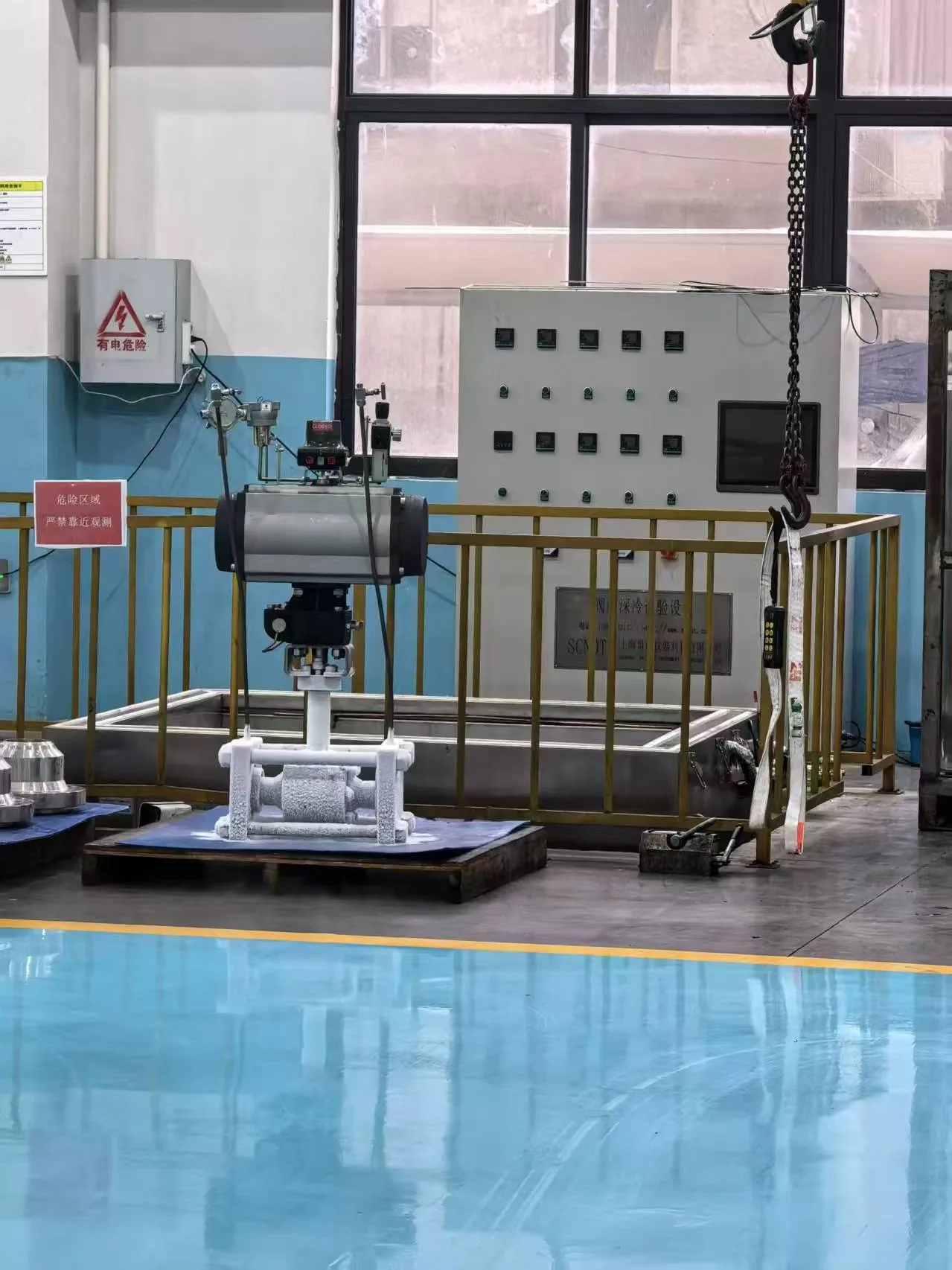
Cryogenic Testing
If cryogenic testing is required, include the test standard or procedure, temperature, duration and acceptance criteria in the RFQ.
Technical documents for project review.
For technical evaluation, request the applicable product documents and inspection records for the offered valve configuration.
Product Photos
Additional finished-valve, nameplate and component photos are available for the selected valve configuration.
GA Drawing / Datasheet
GA drawings and datasheets are prepared for the selected size, pressure class and valve configuration.
Testing & Inspection Records
Inspection documentation can include pressure testing, dimensional inspection, PMI, NDE/NDT and coating records as required by the project.