
Top Entry Trunnion Ball Valve
Top Entry Trunnion Ball Valve is selected for critical process or pipeline lines where in-line access to the ball, seats and stem can reduce maintenance disruption. A top entry trunnion ball valve combines fixed ball support with a top-opening body. It is selected where valve removal is difficult, line downtime is costly or maintenance strategy favors access to internal parts from above. Pressure class, body material and seat arrangement remain project-specific.
Top Entry Trunnion Ball Valve for industrial valve projects.
A top entry trunnion ball valve combines fixed ball support with a top-opening body. It is selected where valve removal is difficult, line downtime is costly or maintenance strategy favors access to internal parts from above. Pressure class, body material and seat arrangement remain project-specific.
When to select this design
Critical process or pipeline lines where in-line access to the ball, seats and stem can reduce maintenance disruption.
Choose this design when in-line trim access is a stronger requirement than the simpler side-entry body arrangement.
Typical applications
- Compressor stations
- Critical process lines
- Pipeline stations
- High-value shutdown service
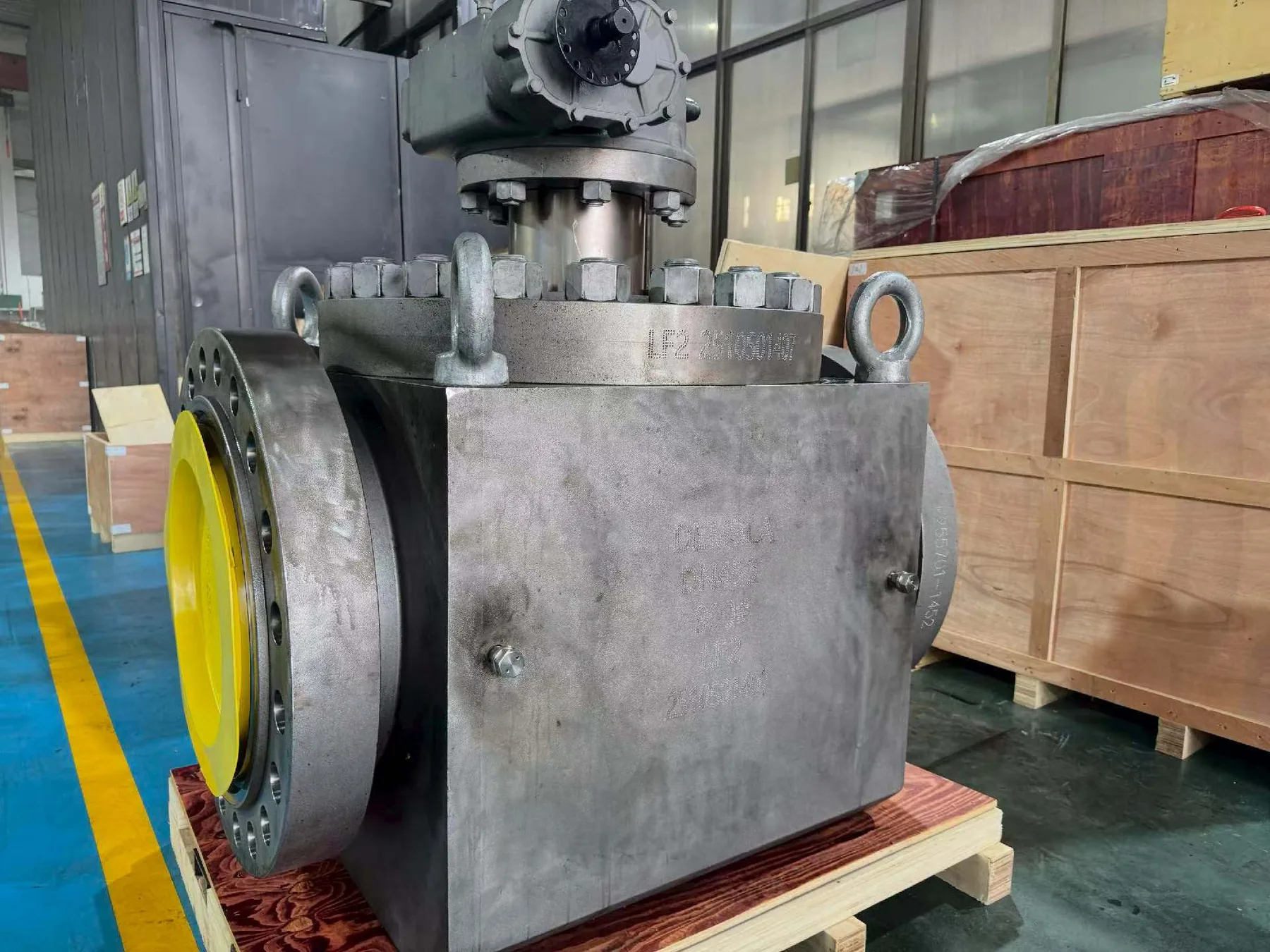
Top Entry Trunnion Ball Valve: design points to confirm.
This is a specific valve construction. Final size, class, material and seat combinations depend on the approved datasheet and design calculation.
| Body construction | Top-entry construction uses a top closure that allows the ball, seats and stem to be accessed from above while the main body remains installed in the pipeline. The ball is trunnion supported for larger or higher-pressure duty. |
|---|---|
| Seat & sealing | Seat cartridges and sealing arrangement must be designed for removal and reinstallation through the top opening. SPE/DPE behavior and cavity relief should be defined with the maintenance concept. |
| End connection | Flanged or butt-weld ends may be specified. Butt-weld ends can be attractive when the valve is intended to remain in the line for long periods and top access is the planned maintenance route. |
| Engineering focus | Maintenance clearance above the valve, lifting procedure, top-cover sealing, seat extraction and actuator removal should be considered during layout review. |
| Material selection | Body and top closure materials should match the pressure-temperature and corrosion requirements. Trim, bolting, seals and overlay requirements remain project-specific. |
| Testing & inspection | In addition to normal pressure testing, project procedures may require verification after trim maintenance or reassembly. Define NDE, bolt/closure inspection and final documentation. |
Engineering considerations for Top Entry Trunnion Ball Valve.
Construction and maintenance
Top-entry construction uses a top closure that allows the ball, seats and stem to be accessed from above while the main body remains installed in the pipeline. The ball is trunnion supported for larger or higher-pressure duty.
Seat, sealing and torque
Seat cartridges and sealing arrangement must be designed for removal and reinstallation through the top opening. SPE/DPE behavior and cavity relief should be defined with the maintenance concept.
Piping and installation
Flanged or butt-weld ends may be specified. Butt-weld ends can be attractive when the valve is intended to remain in the line for long periods and top access is the planned maintenance route.
What to verify before approving the technical offer.
Engineering risk
Maintenance clearance above the valve, lifting procedure, top-cover sealing, seat extraction and actuator removal should be considered during layout review.
Materials and traceability
Body and top closure materials should match the pressure-temperature and corrosion requirements. Trim, bolting, seals and overlay requirements remain project-specific.
Inspection and testing
In addition to normal pressure testing, project procedures may require verification after trim maintenance or reassembly. Define NDE, bolt/closure inspection and final documentation.
Send the valve datasheet together with the piping class and project valve, material, testing and coating specifications. Missing design inputs should be clarified rather than assumed.
Other Top Entry Ball Valves configurations.
Compare related designs by construction, pressure class, temperature range and service conditions.
Choose this configuration when both cryogenic design and in-line maintenance are required.
Compare Cryogenic Top Entry Ball Valve →Choose this design when severe-service seating and in-line trim access are both mandatory.
Compare Metal Seated Top Entry Ball Valve →Return to the Top Entry Ball Valves range to compare all configurations.
Back to Top Entry Ball Valves Range →Continue the technical selection.
Use these pages to check pressure class, material, standard and end-connection requirements against this valve design.
Top Entry Trunnion Ball Valve FAQ
What is a top entry trunnion ball valve?
A top entry trunnion ball valve combines fixed ball support with a top-opening body. It is selected where valve removal is difficult, line downtime is costly or maintenance strategy favors access to internal parts from above. Pressure class, body material and seat arrangement remain project-specific.
Where is a top entry trunnion ball valve commonly used?
Typical applications include Compressor stations, Critical process lines, Pipeline stations, High-value shutdown service. Final suitability depends on the actual service medium, pressure, temperature and project specification.
What information is needed to quote a top entry trunnion ball valve?
Provide size, quantity, pressure class, body and trim materials, seat material, end connection, design pressure and temperature, media, operation, design standard, fire-safe/emission requirements, testing, coating and documentation scope.
How is a top entry trunnion ball valve different from other top entry ball valve designs?
Choose this design when in-line trim access is a stronger requirement than the simpler side-entry body arrangement.
Technical documents for project review.
For technical evaluation, request the applicable product documents and inspection records for the offered valve configuration.
Product Photos
Additional finished-valve, nameplate and component photos are available for the selected valve configuration.
GA Drawing / Datasheet
GA drawings and datasheets are prepared for the selected size, pressure class and valve configuration.
Testing & Inspection Records
Inspection documentation can include pressure testing, dimensional inspection, PMI, NDE/NDT and coating records as required by the project.